This discreet newsletter teaches you how to make him cum hard, give freaky blow jobs & make him scream your name in bed. Click here to get it.
A sub (aka submissive) is someone who gives up control to someone else in a BDSM dynamic or relationship. This guide on being a good submissive will teach you what a sub is (and isn’t), the 8 dangerous red flags to look out for in doms, and, most importantly, 23 behaviors & tips on how to be a good sub.
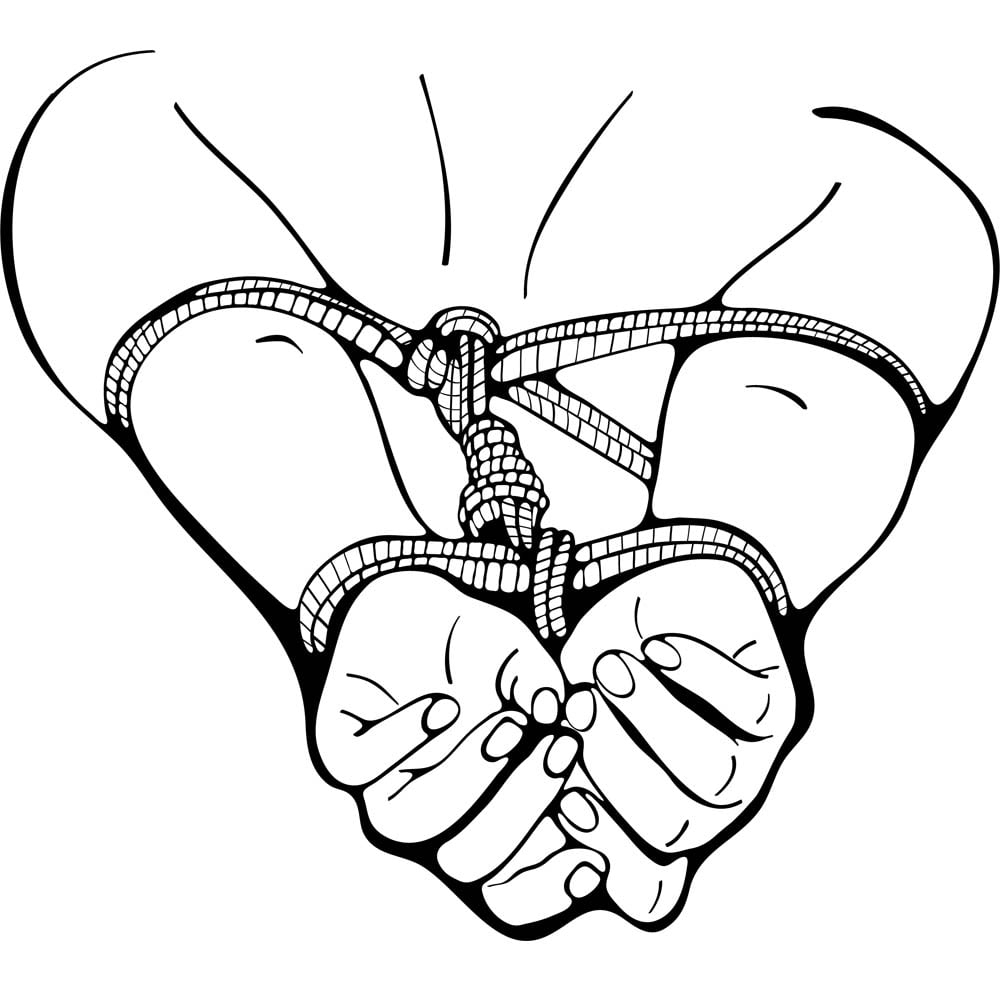
What is a Sub?
From the outside, a sub is someone without power, who must take what their dominant (19 types of dominants) dishes out. Often, being a sub can involve serving their partner and being used sexually. However, the reality is that the sub willingly gives up that power and can revoke it at any time.
Side note: If you are currently struggling to orgasm during sex or masturbation, then you may want to learn about the Easy Orgasm Solution. It will teach you how to have multiple...
Vaginal, clitoral and full body orgasms during sex and masturbation. It works even if you currently struggle to orgasm during sex or when masturbating. You can find out more here.
A sub may hand over control for the duration of a scene, the course of a relationship, or any time in between. Power exchange interactions can be limited to the bedroom, may be kinky but not overtly sexual, or may extend to a person’s whole life outside of the bedroom.
But what about what a sub isn’t?
What a sub is not – A sub isn’t broken or weak, for one. A sub isn’t anti-feminist or brainwashed. Nor is a sub someone who can be used and abused without consent. A sub is someone who consents to activities that otherwise might be harmful or abusive.
Everything you need to know: Consent during BDSM & sex.
You might be asking yourself, “Why would someone want to be a sub?” There’s no single answer. Some people like giving up control because their daily lives are stressful and require them to be responsible. Being a submissive can also make you feel cared for.
Squirting: Any woman can experience the intense pleasure of squirting, if you follow the right process. I demonstrate the most powerful squirting techniques and explain the process, step-by-step in the Squirting Magic Guide.
Why is being a sub (BDSM) different from being submissive in daily life?
Some people have submissive personalities. They might be shy or quiet and let other people take the lead. But…
People like that aren’t necessarily a sub when it comes to BDSM. Sometimes, people who have little power in their daily lives or jobs like to play the dominant role during BDSM scenes, because it gives them agency.
Plus, some people identify as switches, which means they can play either role depending on the situation or relationship. You can even be a sub with one person and a dom with another!
Read: What is a switch in BDSM?
While many subs would ideally have a dominant partner, you can still explore your submission without a partner. As a single submissive, you can experiment with self-bondage (15 fun self bondage ideas), engage with kinky entertainment, such as erotica or porn, and learn from a variety of content to explore your submission.
8 Dangerous Red Flags to Look Out for in Doms
As a sub, it’s important to treat your submission as a gift and guard it as such, no matter how eager you are to submit to someone. Not everyone deserves that gift, even if they’re experienced at domination and interested in you. Skills don’t make up for major incompatibilities.
Important – Anyone can say they’re a dominant, but trust is earned, not demanded.
Quick Warning: This tutorial will teach you how to give your girl the most powerful orgasms of her life and turn her into a nymphomaniac. If you are interested in making her scream with pleasure and make her crave sex with you, then check out my guide, How To Turn Your Wife Into A Nymphomaniac here.
There can be real consequences of letting someone who isn’t trustworthy dominate you. If you really want to know how to be a sub, you’ll protect yourself.
With that in mind, here are some red flags to watch out for so you can avoid them… and some green flags that indicate someone might be a good dom.
1. Ignoring Your Limits
Limits in BDSM are yours to set as a submissive for whatever reason you choose. Whether they’re hard or soft limits, it’s a new or established partner, or a novice or expert kinkster, you should be able to rest assured that limits will be respected. This also includes during the heat of the moment, when passion, arousal, or power can tempt us to push things too far.
Green flag – Instead, look for the green flag of someone respecting your limits, even if that might restrict some activities that seem universal or “tame.” Wanting to understand your limits and respectfully asking about them, without pushing or triggering trauma, can also be a green flag.
2. Pushing Boundaries Too Fast
This red flag can be closely related to disrespecting limits. Pushing boundaries can be a wonderful part of BDSM, helping you to explore yourself and your submission and strengthening your relationship. But it can also be dangerous and lead to serious regrets.
Green flag – A good dom appreciates and respects risks and takes their time to get the education and experience they need to push your boundaries. They might even slow things down to ensure everyone’s ready to try something new in a safe way. You can always do more or increase the intensity, but you can’t take back something that went too far.
It’s not a unilateral system, either. Communicating about things because D/s interactions are something you create together is a green flag for sure.
Learn: How to have a great D/s relationship.
Quick Quiz: Do You Give Lousy Blow Jobs?
If you are new here, then you may want to take the quiz below to learn how good you are at giving oral sex and satisfying your man. You may discover you that you suck (pun intended) or that you are already a blow job queen.
3. Letting Their Emotions Lead the Way
Another red flag is someone who isn’t in control of their anger or brings it into the bedroom or BDSM scene. Yes, as a sub, you might have expectations placed on you and may be ‘punished’ for failing to do something acceptably. But those punishments should fit the crime, be expected, and not be given out of anger, just like you never punish a child when angry.
Plus, punishments are often discussed and agreed upon in advance.
Related: 16 BDSM punishments for effective behavior training.
It’s okay for someone to express frustration or disappointment, even anger, as long as it’s not out of control.
Beware of any unchecked emotion, including jealousy.
4. Bringing Outside Disagreements Into the Scene
Your D/s scene isn’t the place to work out your issues about money, parental duties, or whatever other stresses you have. It’s a major red flag behavior for any dom to use your submissive role to get you to agree or to take their feelings out on you while you’re bound and/or when they have a tool that can cause real harm in their hand.
It could also mean they’re controlled by their emotions and not the other way around.
Green flag – Instead, look for people who display the green flags of working out issues through respectful communication, even if that means avoiding D/s while you’re in an argument.
Make him obsessed: The Blow Job Bible will teach you how to give blow jobs that will make your man cry with pleasure and become sexually addicted to you. If you are interested in having him completely obsessed with you and only you, then you can find out more about the course here.
5. Withholding Attention or Affection as Punishment
A related red flag of a dom, or any partner really, is ignoring you, giving the silent treatment (withholding attention), or withholding affection as a form of punishment. Not only are both of these considered abusive, but they also weaken the foundation of your BDSM interactions or D/s relationship.
Green flag – The green flags that are counterparts to this behavior include being able to communicate and reassure you, even when frustrated, so that you don’t doubt your worth or relationship.
6. Barring You From the Kink Community
The BDSM community, whether local or online, can be invaluable on your journey when learning how be a good sub. Connecting with the community can teach you how to use and care for tools and to avoid unsafe people. You might also find a mentor there who can help you become the best submissive you can be!
7. Trying to Break You
Sometimes, so-called doms will say they want to “break” a sub. This is different from brat taming and training. “Breaking you” can cause real psychological damage, and you should run far away if anyone says or tries anything remotely like this.
8. Humiliating You Outside the Scene or Dynamic
Humiliation that’s wanted can be hot. Insulting and degrading you outside of your agreement is textbook abuse, however.
These aren’t the only red flags to look out for. Some red flags are pretty universal, no matter what type of relationship you have with someone:
- Being selfish
- Having an unchecked ego
- Lacking empathy
- Not communicating often enough
- Refusing to listen to you
- Isolating you from loved ones
- Not apologizing
- Doing things that can cause injury or trauma,
- Lying
Letting someone like that dominate you could mean you get seriously hurt, or worse.
Possibly useful: If you want to give your man (& yourself) back-arching, toe-curling, screaming orgasms that will keep him sexually addicted to you, then you'll find them in my private and discreet newsletter. You'll also learn the 5 dangerous & "dumb" sex mistakes that turn him off and how to avoid them. Get it here.
Safety As a Sub
During a scene, your ability to promote safety is limited. That doesn’t mean you’re helpless or that you can’t do anything to be safe before you’re tied up.
In BDSM, safety falls on everyone’s shoulders.
This starts with choosing who you play with smartly, and not ignoring the red flags above. After that, don’t agree to any play that you can’t trust to be done safely.
A safety ethos guides how you approach BDSM. The popular principles include SSC, Rack, and Prick.
A clear head generally means not playing while under the influence of drugs or alcohol, which can confuse your senses and slow your reactions.
Communication is ongoing in any D/s scene or relationship, starting with negotiation (that can include BDSM contracts).
You also need to communicate how you’re doing during the scene, and safe words can help with that. Don’t fall into the trap of trying not to use your safe word. This makes you an unsafe person for doms to play with because you’re not being trustworthy.
Dirty Talk: With the right kind of dirty talk, you can turn your man on and keep him sexually addicted to you. You'll find the most powerful dirty phrases in the Wild Dirty Talk guide. You'll also learn how to say them with confidence.
Aftercare is everything you need to return to your physical and emotional baseline after a scene. It can help combat sub drop, but it is important even if you don’t experience subspace or drop.
Consider whether your dom would benefit from aftercare, too.
How To Be a Good Sub – 23 Tips & Behaviors
Learning and mastering these 23 tips and techniques will enable you to become a great sub for your dom.
They get increasingly exciting and wild from #10 onward.
1. Keep Learning
There’s no way you can possibly learn everything about being a good submissive; it’s an endless journey.
There’s no shortage of content online about how to be a sub, including forum threads, podcasts, and social media content. You’ll also find a ton of books that can help teach you how to be a submissive.
2. Be Attentive
You can’t follow your dom’s instructions or learn what turns them off if you’re not paying attention. This means minimizing distractions like your phone so you can be present in the moment.
3. Trust Your Dom’s Guidance
Being a good submissive requires an immense amount of trust. Otherwise, how or why would you hand over control to your partner? Of course, this assumes a caring and compassionate dom.
If that’s the case…
Your well-being and growth should be their priority. If you’re feeling anxious or unsure, talk about it! A good dom will want to ease your anxiety or slow down so you can set a pace that maximizes comfort and safety.
4. Aim to Improve
To be a better sub, try to improve on your previous actions and performance. Listen closer, be neater or quicker, control your emotions better, and grow your patience. There’s no competition other than your past self on your quest to become a better submissive.
5. Represent Your Dom Well
Many people view a sub’s behavior as a reflection of their dominant’s training, skill, and overall judgment, and representing a dom is a necessary part of what makes a good sub. This may be especially true if you’ve been collared.
6. Be Yourself
Being a good sub isn’t about playing a role or imitating a trope. Instead, it’s about letting your sub side come out to play! It might sometimes be awkward or make you nervous, but it will be far less uncomfortable than trying to be something you’re not (and trust that other people will know when you’re doing that).
7. Clearly Communicate
Don’t assume your dom knows what’s going on inside your head. Make your needs, desires, and limits known to them. Otherwise, resentment may fester because your dom couldn’t figure them out/guess them.
8. Respect Your Dom
It goes without saying that you should respect any partner. Otherwise, why would you play or be with them? Respecting your dom can happen in private, with how you talk to them or how well you listen. But how you treat or talk about your dom in public also indicates whether you respect and honor them.
9. Listen to Your Body
We often ignore the messages our bodies are trying to send us. This can lead to serious health issues. In BDSM, this can mean injuries. So listen to your body and don’t try to push yourself past your physical limits.
10. Service
Serving your dom, or someone else, can include preparing and serving food, cleaning, and other chores, often following precise instructions. You might find yourself polishing your dom’s boots until they gleam!
Sexual service, including free use, is also a common component of service. A sub can even serve as furniture for their dom.
Try: 19 bondage positions for your next BDSM scene.
11. Oral Sex
Giving oral sex, whether that’s giving a blow job or performing cunnilingus, is often an important component of being a submissive. Some might even say that being able to deep throat will help you become the perfect sub.
12. Training
Training encompasses multiple things in this list. It’s about learning to do what’s expected of you and doing it well. It can include training your body to take a spanking or kneeling before your partner, or things like obedience training.
Try next: 11 tasks for submissives.
13. Verbal Submission
Verbal submission involves what you say or, at least, the sounds you make. This can involve begging/pleading for what you want (or don’t want) to happen, praising your dom (which works great if your dom has a praise kink), using honorifics, and only speaking when spoken to, for example. Receiving scolding can also be a form of verbal submission.
You may even want to mix in some dirty talk.
Go deeper: 103 submissive things to say to your dom and 162 dominant things to say to your sub.
14. Protocol
In BDSM, protocol means the rules and etiquette you follow that help reinforce the power exchange and help you get into your mindset as a sub.
Total power exchange: Learn about the TPE kink.
Protocol can include:
- Clothing and accessories (how to dress sexy)
- Honorifics and titles (check out these pet names for ideas)
- Whether you can make eye contact or must keep your gaze down
- How you greet your dom (kneeling, with oral sex, etc).
- Asking for permission
- To-do or task lists, or daily schedules
Some people prefer a more rigid high protocol style, while others prefer a more casual low protocol style. Find what works for you.
15. Impact Play
Whether with a hand, flogger, whip, cane, paddle, or something else, many subs engage in impact play. This type of play can be a punishment used to deter unwanted behavior or can be a “funishment,” where it’s desired by the sub.
Related: Impact play guide.
16. Roleplay
As a sub, you might play roles of lesser power, while your dom takes up the role with more power. Teacher and student or warden and prisoner are two common scenarios.
Check out: 35 BDSM role play ideas & scenarios for wild sex!
17. Sensory Play
Sensory deprivation play in BDSM can deepen your submission. Often, it involves blocking or partially blocking a sense, like wearing a blindfold. However, you can also increase sensation, like with temperature play or by running something soft along your skin.
18. Bondage
Whether it’s rope, cuffs, plastic wrap, or something else, bondage and submission often go hand in hand. Bondage doesn’t have to be as intense as suspension or mummification, either.
Check out the guide to light bondage and our bondage for beginners guide.
19. Orders
You don’t need to read minds to know how to be a good submissive. Listen to what your dom wants, and do it!
Doing so can earn you rewards and praise, but failing to do so might result in…
20. Punishment
If you truly want to be a good submissive, you’ll accept appropriate punishments and try to avoid breaking your submissive rules or failing in the future.
21. Humiliation/Degradation
Not everyone’s into humiliation, and you can still be a good sub even if it’s not your thing. But some people really like it and find it highly arousing.
22. Worship
Worship can take two forms: general worship of your dom as if they were a deity, or worship of a specific body part. The latter is common in the foot fetish community.
23. Collaring
Collaring can be a very important concept to some in a D/s relationship. Some people compare it to getting married, and the ceremony is sometimes performed in front of others. However, a dom placing a collar on you denotes ownership and power exchange.
Common Myths About Subs
There are many misconceptions about subs, including that they are weak, lack self-respect, or are powerless. Some people think that subs are doormats to their dominant partner.
This couldn’t be further from the truth.
Many subs are strong, confident, and vocal self-advocates who are ready to stand up for themselves.
Is it a trauma response? – One research paper, cited over 400 times found that:
“more recent literature on psychosocial and clinical characteristics of BDSM participants [43], falsify the view that BDSM practitioners are psychologically disturbed or characterized by maladaptive psychological processes or even psychopathology, and suggest it is unlikely that having experienced one or more traumatic (sexual) experiences is a major cause for developing a preference for BDSM activities. We therefore conclude that these results favor the view of Newmahr [6] that BDSM may be thought of as a recreational leisure, rather than the expression of psychopathological processes.” [1]
Translation: People tend to do BDSM for fun, not because they are dealing with trauma.
Another common misconception about subs is that they’re all masochists who love pain. But subs don’t necessarily enjoy pain. Some prefer sensual BDSM and praise to more intense or painful stimulation.
Related: What A Pleasure Dom Is & 11 Tips To Be One.
7 Common Mistakes Made by Subs
Being a good sub doesn’t mean you won’t make any mistakes. But try to avoid these common pitfalls as much as you can.
1. Not Communicating
Don’t assume that your dom knows what you do or don’t want, need, or feel. They may know you well, but they’re not mindreaders. Previous partners or sexual experiences may have been very different, too.
So speak up, because it gives your interactions or relationship the best chance to flourish.
Related: Use Sexual Communication for Complete Sexual Fulfillment
2. Assuming the Dom Knows What They Are Doing
In contrast, if you assume that your dom has all the knowledge, experience, and skills necessary to do everything without your input, you’re not really being a good submissive. Luckily, no one has to know everything. You can learn together, and that vulnerability can bring you closer together.
3. Not Reassuring Your Dom
Doms aren’t immune to self-doubt and may wonder whether they’re doing right by you or performing well. They can also feel bad about themselves or experience top drop after a scene, but may struggle to express those feelings. Some grateful, affectionate, and reassuring words are often welcome.
4. Not Using Safe Words
Sometimes, a sub is so eager to please their dominant that they don’t want to use their safe word, even when they should (how to please a guy sexually).
Rest assured that while a dom may be disappointed if they have to pause or end a scene, they will be more pleased that you alerted them to something that was wrong, especially if it helps avoid physical, emotional, or relationship trauma.
If it helps, you can suggest a scene where the goal is to use your safe word. This lets you associate it with pleasing your dom.
5. Using Doms as Kink Dispensers
We touched on this earlier.
If you view a dom as a way to get your kinks met and not as a real person with their own needs, desires, and feelings, you’re not being a very good sub because you’re objectifying your dom.
If you’re not interested in a D/s relationship, you might consider a play partner or even paying a pro Dom/me for their services instead.
6. Ignoring Red Flags
We mentioned red flags above so you can identify them and react accordingly. A single red flag may not be a dealbreaker, but it could make you stop to check how a dom responds to certain things.
People can change, but…
A bouquet of red flags should send you in the opposite direction. Don’t start a relationship trying to change someone.
Perhaps more importantly, if you ignore, accept, or condone red flags, you could find yourself on a slippery slope to abuse. And once you’re in that position, it can be tough to get out, and that’s assuming you’re not physically or mentally hurt.
7. Not Vetting Dominants
Of course, we don’t suggest trusting blindly. That’s why we’ve listed some red flags you’ll want to avoid earlier in this guide.
You should vet your partners. Vetting can involve:
- Speaking with people in your kink community about them
- Talking to their other/past partners
- Discussing your relationship, including expectations, rules, and treatment, with a trusted mentor
Types of Subs
As you’re trying to figure out what your flavor of submission looks and feels like, you might try different types of submission.
These include:
- Brats
- Service subs
- Smartass masochists
- Pets
- and more
You don’t have to be one type of sub. Many people combine elements from different types of submission to find their best fit.
Finally, remember that there is no such thing as a perfect submissive. Your submission, like everything else in your life, is imperfect, and striving to be the best version of yourself is a process. You can only work toward being a better submissive tomorrow than you are today, and frustrations in your life or relationship can make it hard for you to be a good sub from time to time.
It’s also important to keep in mind that what it means to be a good submissive can change over time as your relationship changes. For some people, their submission only grows, but this isn’t the case for everyone.
Be true to yourself, be flexible enough to grow, respect your dom, and you’ll prove you know how to be a good submissive.
Orgasm Every Time. Easily. Here’s How...
I want to tell you about my friend Karen.
Karen came to me one day. She was hysterical.
She told me that her marriage was falling apart because she and her husband didn’t have satisfying sex.
Every time they were intimate, Karen was faking her orgasms. It turns out she couldn’t orgasm during sex.
In fact...
She never had an orgasm in her entire life. Not one!
This left her feeling embarrassed and ashamed. And...
She completely hid this from her husband. Thankfully...
I had just put the finishing touches on my course, the Easy Orgasm Solution. It teaches women how to have multiple vaginal and full body orgasms during sex and masturbation.
I shared it with Karen.
After she followed the simple process, she could barely come to terms with how...
Quickly and dramatically her sex life changed.
We met up a few months later and...
She would not stop talking about it,
“I thought I was one of those women who couldn’t orgasm. I used to think I was ‘broken’ and ‘unfixable.’ This saved my sex life, and that saved my marriage.”
Even if you currently struggle to orgasm during sex or when masturbating, the Easy Orgasm Solution will also work for you.
And best of all, you don’t need to do anything weird or uncomfortable to start having the best orgasms and sex of your life.


Leave a Reply